
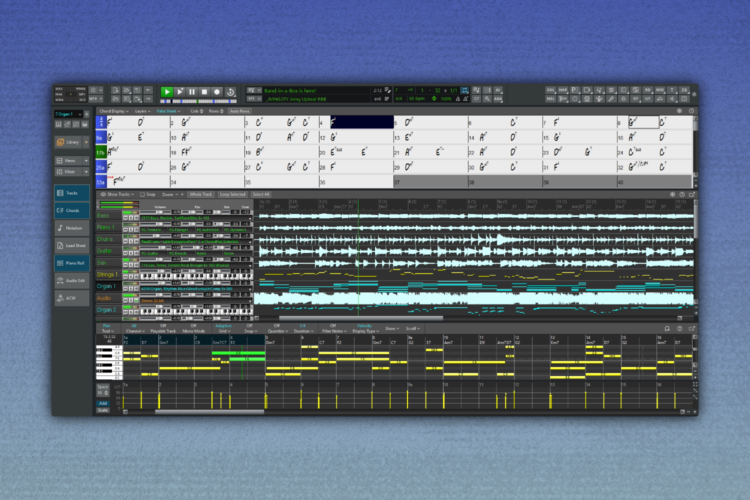
Music software veteran Peter Gannon speaks with zplane about distinguishing PG Music’s products in the AI era, using zplane audio algorithms and more.
For more than three decades, Band-in-a-Box has remained one of the most influential tools in music composition and practice software. Long before generative AI entered the conversation, PG Music founder Peter Gannon was exploring how computers could behave more like real musicians – not to replace human creativity, but to support and enhance it.
In this interview, Peter reflects on the early days of music software development and the evolution of Band-in-a-Box, from MIDI accompaniment to Real Tracks. He also shares his perspective on today’s AI-powered music tools, the role of ethical audio technology, and how PG Music uses zplane’s advanced audio SDKs to continue pushing the boundaries of what music software can do.
Please could you introduce yourself, PG Music, and your role there?
I’m Peter Gannon, and I’m the founder and CEO of PG Music. We make smart music software for musicians – our main product is Band-in-a-Box, which has been around since the late 80s.
What was happening in the music software industry at that time?
This period was pretty much the beginning of the PC music software era, with the arrival of other programs like Finale, Cakewalk, and Dr. T’s, along with Band-in-a-Box. Before the Apple Mac came along, Atari computers were the go-to device for digital music production. And of course, there were IBM PCs too.
As you mentioned, Band-in-a-Box is your flagship product. It was also PG Music’s first product, so how did that come about?
I finished medical school in the early 80s, and had just become a fully fledged medical doctor. I’ve always been musical, and I wanted to continue to play music even though I was a practicing medical professional. I decided to write a small piece of software to help me practice.
“Like many creative pursuits, you set out to do one thing, and you end up doing something else.”
I was particularly interested in Jazz music, so I wrote a program that allowed me to digitally create a rhythm section, which I could play the guitar or piano along to. Like many creative pursuits, you set out to do one thing, and you end up doing something else. One thing led to another, and many years later, here we are.
That’s a lifetime in the technology industry! How has the product changed in that time?


